Dr. Mrs. Hadiza L Osuji
True leadership is not measured by titles or accolades but by the enduring impact a leader leaves behind. The world’s most respected leaders—those whose names become synonymous with excellence—share common traits and practices that enable them to create lasting legacies. They inspire generations, transform organizations, and influence society in profound ways.
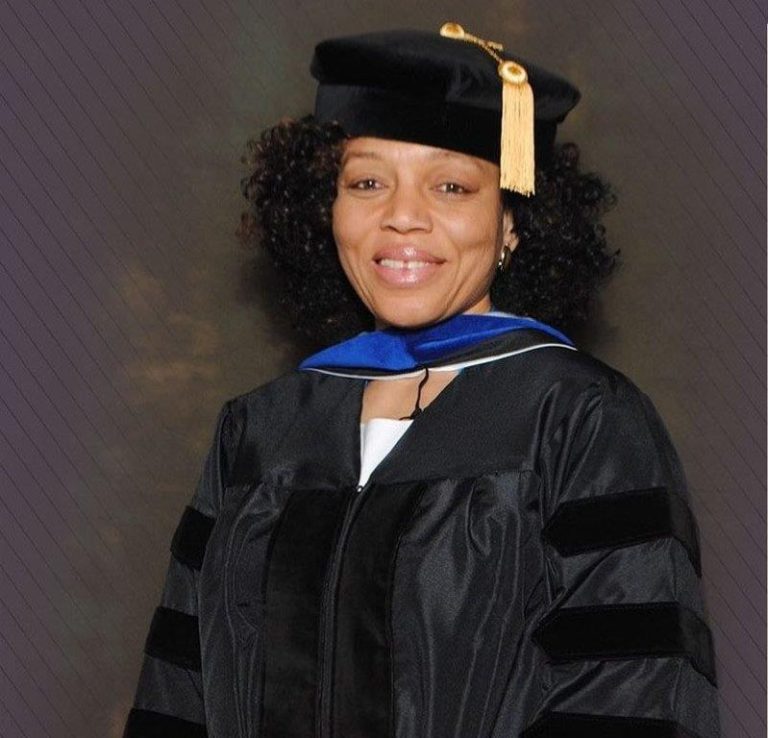
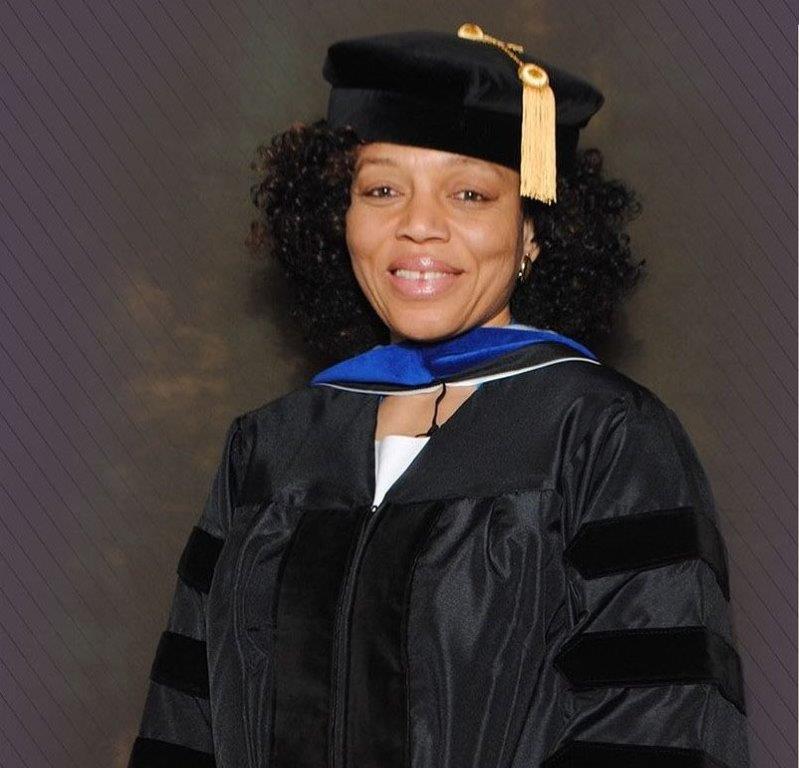
Dr. Hadiza Osuji is the Founder-CEO of African International Collaborative Center (AICC), a public health expert. She is a United States citizen and Nigerian origin, married and a mother of adult children. Born and schooled in Northern and Southern part of Nigeria before the sojourn to New York, USA.
A role model, leader, mentor, activist, and a mother, Dr Hadiza Osuji has carved out a niche in the world with her captivating educational background, the leadership role on a mission to empower African immigrants and other communities of color in the Bronx through culturally responsive programs in arts and culture, technology access, health education, mental health promotion, violence prevention, civic engagement
In this exclusive interview with Adenrele Adewale (Dotololive News Magazine). Dr Hadiza Osuji shares her humanitarian activities, strategy to save lives and protect livelihoods focusing on African immigrants and minority communities in the Bronx, Women’s right advocacy, leadership challenges, rewards and needs for the progress of Africa.
Below are excerpt:
- Can you tell us about briefly about yourself, your family and education background?
My name is Dr. Deaconess Hadiza Osuji, I am originally from Nigeria but based in the US, specifically New York. Currently, I am the Founder and Executive Director of the African International Collaborative Center (AICC) and concurrently serve as the Editor-in-Chief of the African Whistle magazine. Previously, I served as an Adjunct Assistant Professor at the New York University Silver School of Social Work.
Prior to that, I was the Chief Program Officer at the McSilver Institute for Poverty Policy & Research at NYU and concurrently served as Vice Chair of the McSilver Institute Community Collaborative Board (CAB). I have also worked at the Mount Sinai School of Medicine as a Senior Project Coordinator and at Columbia University as a Research Assistant respectively.
My professional background is in Public Health and Public Administration. I have a PhD in public health and a master’s in public administration. I serve on the boards of several organizations and am deeply passionate about community empowerment, with a strong commitment to the betterment of New York City’s African community, particularly African immigrants. I am dedicated to advancing initiatives that promote access to health, education, economic opportunity, and social support, while amplifying community voices and fostering culturally responsive, community-led solutions that create lasting impact and improve quality of life. I am an ordained Deaconess, have a deep faith in God Almighty and hold my Christian values strongly. I am married and blessed with children. In my spare time, I enjoy watching movies, fashion and shopping.
- Leadership is a dynamic process, which deserves study, it is a relational process involving interactions among leaders, members and sometimes outside constituencies. What have been the most challenging and most rewarding aspects of leadership for you?
The most challenging aspect of leadership for me is making tough decisions with limited resources, balancing different needs and expectations and staying accountable during times of change or uncertainty.
At the same time, leadership is deeply rewarding for me because it allows me to see people grow, build confidence, and succeed. Creating meaningful impact, fostering trust and collaboration, and helping others thrive makes the challenges worthwhile for me.


- You are the Founder and Executive Director of AICC, what are the vision and mission of the organization?
Our mission at AICC is to empower African immigrants and other communities of color in the Bronx through culturally responsive programs in arts and culture, technology access, health education, mental health promotion, violence prevention, civic engagement, and resource access while working closely with community leaders, organizations, and faith-based institutions to meet real community needs. Consequently, we envision a Bronx where African immigrants and other communities of color are uplifted, celebrated, and equipped with the resources to thrive for generations.
- With your leadership role and vast experience as director AICC and as a global citizen, Can you tell us the needs in Africa? What will it take to build entrepreneurship and employment in Africa? And what you are you trying to do to move the needle?
Africa needs a selfless and courageous leader with a vision for the progress of Africa. A ‘Moses’ so to speak to lead Africans to the promise land. Also, a leader that can strive to provide the basic amenities for life: light, water, good roads, hospitals, and schools.
I believe that building entrepreneurship and expanding employment in Africa requires a multifaceted approach including:
- Increasing access to funding such as investments, grants, and affordable loans to help startups grow, and to support community-based organizations to implement programs that open pathways to employment.
- It also means providing relevant training, vocational education, and mentorship to equip people with practical, employable skills and empower them to create opportunities for themselves.
- Investing in reliable infrastructure, including electricity, internet, and transportation, is essential to boost productivity and ease of doing business.
- Governments must create business-friendly policies by reducing bureaucracy and offering incentives that encourage entrepreneurship and investment. Finally, I see strong networking platforms that connect entrepreneurs, investors, and industry experts as vital for fostering collaboration, innovation, and sustainable growth.
To move the needle, I think requires using tested approaches to create the right environment for entrepreneurship and employment. Supporting local businesses to buy local products, promote African brands, and encourage entrepreneurship. Mentoring and sharing expertise, guiding startups companies, and inspiring young entrepreneurs to invest and collaborate. Also, encouraging innovative solutions by addressing local challenges with creative, and scalable solutions. Finally, the need to collaborate and partner with governments, organizations, and international bodies to amplify impact cannot be overemphasized.
- In the past 20 years, sub-Saharan Africa has achieved some of the most dramatic breakthroughs in the world. The number of female legislators on the continent has increased, would you consider yourself as a politician someday, how would you rate women in politics?
I don’t think so. I am driven to enter a field where I can advocate for women’s rights and structural change, perhaps through advocacy, or community leadership roles. However, even though I am not politically inclined, I can’t rule out the possibilities. Seeing women like Ellen Johnson Sirleaf or newer leaders like Emma Theofelus in Namibia motivates me to contribute to governance. I believe that if you want to see change in your community, you have to be willing to shape it.”
It is encouraging to see that over the past 20 years, sub-Saharan Africa has made some of the most dramatic, yet often overlooked, breakthroughs in women’s political representation. Rwanda leading the world with over 60% women in parliament is a testament to the fact that African women are not just capable but essential to effective governance. I believe women in politics are doing excellently well, achieving giant strides and raising the bar. We need more women in politics.
I was motivated by the need to bridge the information gap within the African community, promote African heritage, and highlight the valuable contributions Africans make especially the many individuals who are doing remarkable work and positively impacting their communities. Too often, the narratives we encounter about Africans focus on negative stories, and I sought to help change that narrative.
- You are the proud publisher of African Whistle Magazine which serve to bridge the information gap in the black community and provides culturally relevant, what motivated or inspired this great concept, and how would you educate interested prospective young readers and publisher who may want to emulate you?
I will educate prospective young readers or publishers that magazine publishing especially now is challenging because the era of “just print” is over. To be a modern publisher, you must think across platforms and understand that most readers will find you first on their phones.
Also to understand that magazine is not just a collection of articles but a neighborhood of ideas, community, and business strategy. In the sense that, are the contents relevant to the focused audience, do your readers feel at home reading the magazine, hence will read and keep coming back, do you have a plan that keeps the lights on? In other words, exploring how you can survive beyond traditional ads because no revenue means no magazine.
Further, don’t try to be everything to everyone, know Your “Niche” find a specific passion whether it’s sustainable fashion, gaming, or local social justice and become the authoritative voice for that community. You don’t need a massive budget to begin. You can start small. Reach out to editors you admire for “informational interviews” who you know often matters as much as what you know. You don’t need to wait for permission to be a publisher. If you have a voice, a niche, and a platform, you are already one just keep evolving.
- African policymakers, International organization need to develop a two-pronged strategy of “saving lives and protecting livelihoods.” This strategy includes (short-term) relief measures and (medium-term) recovery measures aimed at strengthening health systems, providing income support to workers and liquidity support to viable businesses, Can you tell us what your organization has done in this regard?
At AICC we employ two-pronged strategy to save lives and protect livelihoods focusing on African immigrants and minority communities in the Bronx. This approach includes short-term relief through community health education, mental health promotion, and violence prevention, alongside medium-term recovery efforts such as tech access, resource collaboration, and publishing the African Whistle Magazine. Internationally, we outreach to orphans and widows providing skills acquisition opportunities, scholarships and educational support.
- African ethnic groups and tribes have customs and traditions that are unique to their culture. What do you like about African Culture?
What I like about African culture are the deep-rooted values of community and respect, the unique and rich culinary and vibrant fashion expressions. The music, dance and the languages.
- Dotolive News Magazine (DNM) would like to promote and reporting your activities. How would you support the media organization?
Collaborate on information sharing and dissemination, providing support as needed.
- Amazing memories are unforgettable; can you share with us the most amazing memory?
Growing up, I have been blessed with many memorable experiences and meaningful relationships that have shaped my life. During my secondary school years at Kaduna Capital School in Kaduna, I had the privilege of attending school alongside Nana Otedola and other individuals who are now notable figures.
My university years at University of Ilorin, Kwara State were equally impactful, where I studied and lived in the dorms with Ronke Idiagbon and others. I fondly remember my National Youth Service Corps (NYSC) year in Ibadan, working at the Nigerian Breweries as a Laboratory Technologist. Getting married, migrating to the United States, having my children, and completing my PhD are milestones I hold close to my heart. First and foremost, I am deeply grateful to God for this landmark success.
I am grateful for my siblings, who remain my strong support system, and for the opportunity to work with an extraordinary mentor and former boss, Mary McKay, as well as to know her wonderful family. I also cherish my long-standing professional and personal relationship with my friend and colleague, Angela Paulino, the members of the African International Collaborative Center Community Advisory Board, and my church family. The cherished moments spent with my children (the birthdays, Christmas, thanksgiving, going to church on Sundays, and travelling together). All these experiences and relationships represent treasured chapters in my life.
- What advice would you give the younger ones?
When I stepped out in faith to found AICC, I encountered countless challenges such as limited funding, economic downturns, juggling multiple roles due to limited staff, while also needing systems for finance, communications, technology, and operations. The COVID-19 pandemic further tested my resolve. There were moments when the weight of these obstacles felt overwhelming, Yet I chose to press forward. I worked tirelessly and remained steadfastly committed to the vision God placed in my heart. I worked hard, stayed disciplined to demonstrate transparency, accountability, and impact in order to gain the confidence of donors, partners, and the community.
Above all, God Almighty has been my anchor. My faith in Him is the fuel that sustains me, strengthens me, and propels me forward. Time and time again, He has proven that He makes a way where there seems to be no way. So, the advice I would give to younger ones is to think outside the box, work hard, and remain disciplined. Keep pushing forward, keep knocking on doors, and never lose faith. Most importantly, place God at the center of everything you do, because with Him, all things are possible.
Thanks for sharing us
Thank you .
DNM 2026
About the Author