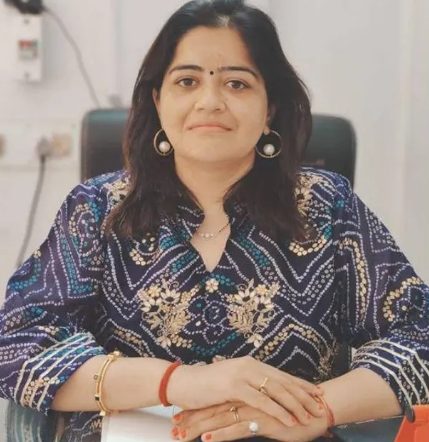
Dr. Aninda Sidhana
Dr Aninda Sidhana is an assistant professor, psychiatrist, mental health expert and cognitive neuroscientist who uses evidence-based research to nudge people towards their wellness goals through behaviour design, gamification and AI.
Her position on how technology impacts our intelligence, acknowledging that it enhances our ability and extends our minds. With that being said, it results in people “offloading a lot of their brain function”, ultimately impacting their brain plasticity.
During this exclusive interview, Dr Aninda Sidhana talks to Dotolive News Magazine from the scripted Interview portal about her journey as a psychiatrist and the intersection of academic and clinical research to understand human behaviour for a more inclusive and holistic design.
She also shares her position on mental health difficulties for young people in the outbreak or pandemic, and for students, cognitive applications of neuroscience are finding their way product design, user research and the broader areas of understanding customer needs!
Below are excerpts:
- Can you tell us about briefly about yourself, your family and education background?
The “Real” Aninda Sidhana: “I would like to tell you who Aninda Sidhana is without any titles, recognition, or labels. As nobody these days asks about the ‘real’ you, and even we all don’t remember who we are if all the titles are stripped away.”
To be very honest, I am my Daddy’s girl—carefree, full of life, and a loyal friend who lights up every room I enter. I am a “glorious mess” who couldn’t draw a straight line with a ruler, taking life one day at a time with no fixed timetable or pocket money. I grew up in a chaotic but loving Punjabi family of psychiatrists where empathy and compassion were the currencies. I was raised with modern values: “If you are driving, learn to fix a puncture.”
Family & Support System: “Blood isn’t always thicker than water.” My family is a house of healers—four psychiatrists (mom, dad, sister, and me). We are joined by my brother-in-law, a radiologist, and our niece, Iana. However, my friends are my true lifelines. “Little do my best friends know that they heal a part of me which they didn’t break.” My cousin’s daughter, Navya, is my “daughter from another mother.” I am surrounded by people who fight for me in rooms where I am not present.
Education & Purpose: Degrees are searchable, but my purpose was found in struggle. Following Viktor Frankl’s philosophy, I found my “Higher Calling” when I didn’t get justice despite evidence. I am passionate about Mental Health (it’s in my blood), Sexual Health (which no one talks about in this populated country), and GBV (which is personal).
- How did you begin your journey as a Psychiatrist?
I was initially clueless. My sister and I never wanted to be psychiatrists because we saw our parents being so busy. But later, I started getting to know the importance of mental health. Psychiatry was a subject chosen by my Dad, but my real passion came from Dr. Nimesh Desai; just one talk from him motivated me to work better and showed me that a lot can be done in this field.
- With this idea of a holistic approach in mind, I’m interested to know: how do you reflect on the relationship between psychiatry and psychotherapy?
“Mind and body are married to each other—one suffers, the other empathizes.” They are not an option; they are complementary. I believe in the Biopsychosociospritual model. Psychiatric care is a team effort involving four pillars: the Psychiatrist, Psychologist, Mental Health Nurse, and Social Worker. No one is a “senior” authority. In today’s world, everyone is fighting a battle you don’t know about. Most problems are solved if you talk to a person, as a listening ear can turn a life around.
- As you know, much has been written about ‘a crisis’ or ‘tsunami’ of mental health difficulties for young people in the outbreak or pandemic. What is your own sense of this Dr Aninda? Do you agree that there has been an escalation in the numbers of young people presenting with mental health difficulty? Or, perhaps, a discernible change in the nature of these difficulties? Tell us…..
Absolutely true. We are witnessing a “silent storm.” India has over 434 million children and adolescents, and since the pandemic, there has been a 60% increase in cases related to self-injury and suicidal ideation.
The Evolution of the “Hero” and Toxic Masculinity:
I am urging storytellers to bring back the ’90s soul—the era of the “chocolate boys” like the early Shah Rukh Khan, where wit, empathy, and vulnerability were celebrated. We have seen a drastic shift in the nature of male portrayal in cinema—moving from the sensitive Ranbir Kapoor in Wake up Sid or Tamasha to the polarizing, hyper-aggressive masculinity seen in Animal.
This shift reflects and fuels a change in youth psychology:

Digital Anxiety: Comparison is the thief of joy.
* The “Animal” Influence: While I believe “Men Can Cry,” modern cinema often rewards the “Alpha” who suppresses pain with violence. This leads to deeper internal conflicts and “future hopelessness.”
* Masking: Youth suppress true emotions to fit a digital or cinematic ideal, leading to transactional relationships and ADHD.
- Can you think of any client story in the healthcare industry that you are especially proud of?
“Storytelling as Survival.” I am proud of a reader who, on the brink of ending her life, came across my public account of surviving trauma and domestic violence. That story became her lifeline.
Through The Dignity Dialogues, we have empowered over 3,400 survivors to move from being “cases to be managed” to being the architects of their own healing. I also helped an LGBTQ client abandoned by his family, stopping a forced marriage and helping him come out; today, his parents are proud of him.
- What role do you think digitalization will play in the healthcare industry?
Digitalization is the bridge to accessibility, especially for those in “shadow prisons” of silence or remote areas. It allows us to reach those too paralyzed by stigma or anxiety to seek help in person. As an advisor to Healcycle, I’ve seen how digital platforms provide 24/7 support when traditional clinics are closed.
What is Healcycle, and how does it impact mental health? Healcycle is a digital sanctuary for mental wellness founder by Ananya Grover .AI women hormones mental health.
* 24/7 Support: It bridges the gap when clinics are closed.
* Tara: We developed Tara—an AI companion represented as a jellyfish. “Tara acts as a non-judgmental listening ear for those facing suicidal thoughts at 2 AM.”
* Mission: To ensure no one navigates their darkest moments alone by providing screening tools and immediate emotional resources.
- Can you say a little about working in the area of Child and Adolescent Mental Health?
Working with children is about creating a “safety net” through connection rather than just clinical intervention. We must prioritize “child-safe zones” and train grassroots caregivers in Psychological First Aid. My goal is to let “youth be youth,” moving away from a system that treats them like machines chasing percentiles and toward one that fosters genuine resilience. Schools should start prioritizing emotional regulation—”Healthy Beginning, Hopeful Future.”
- How do you think the healthcare industry will change over the next 5 to 10 years with the modernity of Artificial intelligence?
AI will revolutionize diagnostics, identifying brain lesions missed by humans or predicting Alzheimer’s years early. However, I believe it must remain “Health Tech with Heart.” “AI can handle data and predictive analytics, but it can never replace the essential human empathy and touch that a psychiatrist provides.”
- What are your goals and dreams for the future?
* Mental Health at the Forefront: To be a Heforshe Ambassador and join #MARD.
* Policy Change: To ensure “Beti Bachao Beti Padhao” is a slogan of hope, so no girl cries and no man has to suppress pain.
* The Ultimate Movie: “To make a movie on my own life story—it’s a blockbuster from red carpets to hospital corridors—to show that GBV spares no one.”
* Global Visibility: To see “MEN Can CRY” on billboards from Mumbai to Times Square.
* The Ultimate Dream: To meet SRK in Mannat; he is the only celebrity whose wit, empathy, and resilience truly inspire me.
- What are the most exciting aspects of working in the healthcare industry?
The move from “illness to wellness” and the breaking of global stigmas. Gen-Z takes therapy as a social status. I am particularly inspired by the rise of Healing Justice and seeing “Men Can Cry” become a global conversation. Seeing a shift away from “toxic machismo” toward vulnerability is the sign of a healthy society.
- Amazing memories are unforgettable; can u share with us most amazing memory?
Iceland: Seeing the Northern Lights (Aurora Borealis) with Ishita Anand. “I use the Aurora as a metaphor: we travel to celebrate colors in the sky; we must learn to celebrate the colors of the mind.”
* The Trek: When Shweta Raina booked a trip for me after my separation because she “didn’t want me to cry at home, but cry out of knee pain.”
* Validation: Receiving the IPS Women Resilience Award 2024, the REX Karamveer Chakra, and a UN Fellowship, which brought my parents to tears of joy.
- Dotolive News Magazine (DNM) would like to be part of your team reporting your activities, promoting your brand, what will be your commitment to you support the media organization DNM?
“I am not a brand; I am a human being who turned her life into a purpose.”
* The Papageno Effect: I commit to contributing narratives that show a way out of darkness to prevent copycat suicides.
* Media Ethics: “Whoever controls the media controls the narrative—and whoever controls the narrative controls the mind.”
* Storytelling: I will use the “Power of the Pen” to heal. “Storytellers are the people who will rule the world and make it a better place.”
- What advice would you offer to someone considering this career?
Empathy, Unconditional Acceptance, and a Non-Judgmental Attitude. The mind is the most complex part of the human experience. We need more advocacy because “Mental Health is Everyone’s Business.”
DNM 2026
About the Author