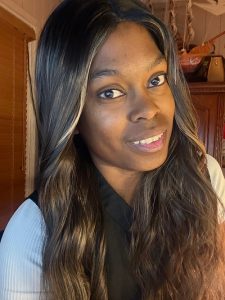
Katelyn Swinton, First Lady
The number of women leaders who are stepping forward as change agents that advocate for the assailable and voiceless in society increases across the world with landmark achievements in humanitarian activities.
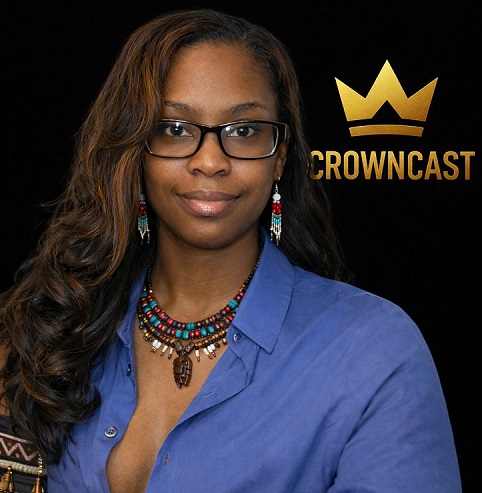
Katelyn Swinton, First Lady, is one of the leading women who uses her global dialogue platform centered on Indigenous sovereignty, women’s leadership, mental health, cultural diplomacy, ethical enterprise, and legacy stewardship.
As a royal emissary, she supports dialogue and collaboration among sovereign institutions, Indigenous nations, and global leadership networks. Her work emphasises respectful engagement, cultural preservation, principled diplomacy, and initiatives that foster stability, mutual benefit, and long-term relationship building.
Her CrownCast is designed not as entertainment but as an educational and intergenerational forum that amplifies Indigenous voices, explores systems-level challenges, and highlights solutions rooted in dignity, continuity, and self-determination.
The First Lady of the Hunnic Matinecock Tribal Nation, has carved out a niche in the world with her captivating educational background, combining formal academic study with ancestral research and institutional leadership experience. and journey into humanitarian activities and leadership roles, contributing to cultural continuity, diplomatic engagement, and initiatives that support the nation’s long-term community, economic, and heritage priorities. Her role reflects a commitment to responsible stewardship, intergenerational continuity, and constructive engagement with partners across Indigenous, academic, governmental, and international circles.
Katelyn Swinton had an exclusive interview with ADEWALE ADENRELE and shared her humanitarian experiences., institutional capacity as Director of Business Development for Herbert Norse Regalis, partnership development, alliance cultivation, and strategic initiatives designed to connect cultural heritage with sustainable economic opportunity., her working in close coordination with Grand Chief Donald DuVal Middleton, my focus includes responsible development, cultural diplomacy, and projects that balance tradition with forward-looking growth and many more
Below are excerpts:
- Researchers put forward a new narrative explaining the variations in African ancestry in the Americas and how these variations were shaped by the transatlantic trade, how have you able to change the narrative for development?
Recent scholarship has rightly emphasized the regional distinctions in African ancestry throughout the Americas and the role the transatlantic trade played in shaping demographic realities. However, for development to be meaningful, the narrative must extend beyond disruption.
My work contributes to reframing that narrative by centering civilizational continuity rather than historical rupture. African societies prior to European interference were governed by complex legal systems, trade networks, spiritual institutions, and educational frameworks. Those systems did not disappear; they adapted, survived, and evolved.
Development rooted in ancestral literacy — understanding governance traditions, land stewardship models, kinship law, and economic ethics — allows descendants to operate from strength rather than fragmentation. The shift is not rhetorical; it is structural. When people understand that their history began with civilization, not captivity, they reclaim psychological and institutional agency.
- Tell us about Hunnic Matinecock Tribal Nation; the mandate, lineage and Heritage, the ancestral and treaty continuity?
The Hunnic Matinecock Tribal Nation is a continuity-based Indigenous nation grounded in kinship descent, ancestral governance, and treaty-recognized sovereignty.
Our mandate is centered upon:
- Cultural preservation and restoration
- Land continuity and stewardship
- Diplomatic engagement rooted in mutual respect
- Intergenerational leadership development
- Ethical economic sustainability
We operate from the understanding that Indigenous nations predate modern state systems. Treaty relationships acknowledge inherent sovereignty; they do not grant it.
Our heritage is not ceremonial symbolism. It is lived governance. Our work reflects restraint, consultation, and stewardship as obligations — not political positioning.
- Can you tell us about briefly about yourself, your family and education background?
I serve as First Lady with a clear understanding that leadership is service to continuity. My lineage reflects West and Central West African heritage, including Nigeria, Benin, Ghana, Mali, Senegal, and Western Bantu regions. It also reflects Indigenous continuity grounded in kinship governance and treaty lineage.
My educational journey has combined formal academic study with ancestral research and institutional leadership experience. I have always approached education as both intellectual formation and historical responsibility.
My family life is structured around stability, continuity, and principled stewardship. Leadership within our household mirrors leadership within our nation: transparent communication, ethical responsibility, and generational planning.
- Promoting African traditional culture and contributing to cultural continuity, diplomatic engagement, and initiatives that support the nation’s long-term community, economic, and heritage are your priorities, what is the inspiration and motivation?
My inspiration is rooted in historical interruption — and the responsibility to restore what was disrupted.
When one understands the scale of cultural displacement, land loss, language suppression, and governance erasure experienced by Indigenous and African-descended peoples, the work becomes urgent.
My motivation is therefore direct:
- Protect continuity.
- Build durable institutions.
- Integrate heritage with modern viability.
- Ensure that sovereignty is operational, not symbolic.
Culture cannot survive if it is economically fragile. Likewise, economic systems cannot endure if they are ethically hollow. My work integrates both realities.
- As the Director of Business Development for Herbert Norse Regalis, you role is to lead partnership development, alliance cultivation, and strategic initiatives designed to connect cultural heritage with sustainable economic opportunity. What have been challenges and the success stories?
As Director of Business Development, my responsibility is to align cultural heritage with sustainable economic strategy.
The principal challenges include:
- Ensuring partnerships respect sovereign standards.
- Preventing cultural dilution within commercial environments.
Navigating global systems that do not always recognize Indigenous governance structures.
Our successes have included:
- Strategic alliances rooted in dignity and mutual accountability.
- Cross-sector partnerships linking heritage with infrastructure development.
- Expanding diplomatic dialogue across cultural and institutional boundaries.
We do not pursue expansion for visibility alone. We pursue alignment that strengthens institutional longevity.
- Yoruba language is spoken in the West African countries of Nigeria, Benin Republic, and parts of Togo and Sierra Leone, therefore constituting one of the largest single languages in sub-Saharan Africa. Yoruba is also spoken in Cuba and Brazil. Does it mean that many people have their ancestral back to Nigeria? Tell us about your ancestry lineage?
The presence of Yoruba language and spiritual systems in Brazil, Cuba, and throughout the Americas reflects historical movement across the Atlantic. However, ancestry is layered and multi-regional.
My lineage includes West and Central West African heritage — including regions corresponding to present-day Nigeria, Benin, Ghana, Mali, Senegal, Cameroon, and Western Bantu territories. It reflects complex continuity rather than singular origin.
It is essential to distinguish between cultural diffusion and identity reduction. Ancestry is not claimed through geography alone; it is understood through kinship continuity, historical literacy, and responsible representation.
- You are the Host of CrownCast, a global dialogue platform centered on Indigenous sovereignty, women’s leadership, mental health, cultural diplomacy, ethical enterprise, and legacy stewardship, tell us more about this great concept?
CrownCast is a global dialogue platform designed to address sovereignty, women’s leadership, mental health within historical context, cultural diplomacy, and ethical enterprise.
The guiding principle is clear: when discussing Indigenous or African-descended communities, context must precede commentary. Trauma must be framed within systemic realities — displacement, institutional barriers, jurisdictional gaps — while simultaneously highlighting resilience, ceremony, kinship, and innovation.
CrownCast does not amplify sensational narratives. It elevates lived expertise, intergenerational knowledge, and structural solutions.
The objective is durable discourse that contributes to policy literacy, institutional awareness, and cultural continuity.
- Have you been to Africa continent and what can you say about NIGERIA?
Africa is a continent of nations, each with distinct governance histories, spiritual systems, and economic structures.
Nigeria represents one of the continent’s most influential cultural and economic centers. It is a nation of remarkable demographic energy, intellectual capital, entrepreneurial momentum, and spiritual diversity.
Its complexity is its strength. Its youth population positions it as a strategic force in continental development.
- There should be a media campaign programme to be organized by you as the first lady of Hunnic Matinecock Tribal Nation to celebrate Yoruba religion, customs, culture, and tradition through spirituality in purity, to bring together a wider audience of Orisha devotees, traditional worshipers, and traditional and cultural institutions. Would you support this project?
Cultural celebration is valuable when it preserves sacred integrity.
I would support initiatives that:● Center elders and traditional custodians
- Present spirituality with accuracy and reverence
- Avoid commercialization of sacred systems
- Promote education rather than spectacle
Spiritual traditions are not marketing assets. They are living frameworks of governance, ethics, and cosmology. Any campaign must reflect that seriousness.
- African ethnic groups and tribes have customs and traditions that are unique to their culture. What do you like about African Culture?
What I value most within African cultural systems includes:
- Communal governance structures
- Strong women’s leadership roles
- Integrated spirituality within civic life
- Intergenerational accountability
- Collective economic responsibility
African traditions often emphasize that identity is relational, not isolated. The individual exists within lineage, community, and land. That orientation provides structural resilience.
- Dotolive News Magazine (DNM) would like to be part of your team reporting your activities, promoting your brand, and what will be your commitment supporting the media organization DNM?
Media partnerships require:
- Editorial integrity
- Cultural accuracy
- Respect for sovereignty
- Non-exploitative representation
If Dotolive News Magazine is committed to responsible reporting that reflects Indigenous and African continuity with precision and respect, collaboration can be explored within that framework.
Sovereignty is not branding. It is governance. Representation must reflect that distinction.
Thank you for sharing with DNM
DNM 2026
Follow Katelyn Swinton, First Lady -Social Media: IG: @crowncast25
About the Author