
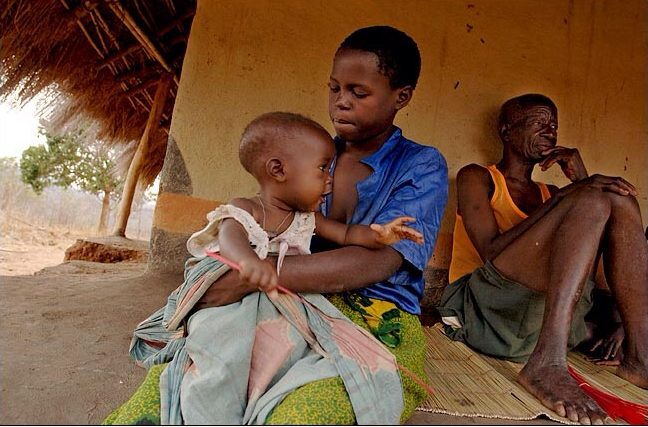
Child Marriage in Nigeria
Abike was just 12 years old when her mother told her to get ready; Alhaji would be coming for her in a matter of hours. Confused and frightened, Abike could not understand why her parents would mortgage her future for marriage.
“Mother, what about my schooling?” she asked.
“Alhaji will ensure you complete your education after giving him at least three children,” her mother replied.
Deep down, Abike knew this promise was unlikely to be fulfilled. As the fourth wife, with several children already competing for attention and resources, her chances of continuing her education were slim.
Sadly, this is the reality for many underage girls in Nigeria, particularly in the northern region. In an attempt to “secure” their daughters’ futures, some parents marry them off early. However, this practice does not protect the child, it deprives her of her rights and opportunities.
Child marriage refers to the union of a person below the age of 18, often a girl, who is not physically, mentally, emotionally, or psychologically mature enough to handle the responsibilities of marriage. This practice violates fundamental human rights. Article 16 of the Universal Declaration of Human Rights states that individuals must be of full age and enter marriage freely with full consent. Unfortunately, this principle is often ignored, as many parents impose marriage on children below 18.
Under Nigeria’s Child Rights Act, a child is defined as anyone below the age of 18. However, not all states have domesticated this law, making enforcement difficult. Furthermore, the Nigerian Constitution does not explicitly define the minimum age of marriage, creating ambiguity and legal inconsistency.
Interestingly, countries like Saudi Arabia have taken firm steps by setting 18 as the minimum legal age for marriage. Nigeria still struggles with achieving this uniform standard.
LEGAL FRAMEWORK
Several legal instruments prohibit child marriage:
Universal Declaration of Human Rights (Article 16):Requires full age and free consent to marriage.
Convention on the Rights of the Child (1990): Establishes 18 as the minimum age of marriage.
Convention on the Elimination of All Forms of Discrimination Against Women (CEDAW):Mandates free and full consent.
African Charter on the Rights and Welfare of the Child (2001): Prohibits child marriage.
Child Rights Act (2003):Defines a child as under 18 and outlaws child marriage in adopting states.
FACTORS RESPONSIBLE FOR CHILD MARRIAGE
Several factors contribute to the persistence of child marriage in Nigeria:
Poverty: Families may marry off daughters to reduce financial burden.
Illiteracy: Lack of education limits awareness of rights and long-term consequences.
Armed Conflict and Insecurity: In unstable regions, early marriage is seen as protection against violence or abduction.
Political and Economic Alliances Some marriages are arranged to strengthen social or economic ties.
Religion and Tradition: Cultural beliefs about purity and honour often encourage early marriage.
Misconceptions of Maturity:Physical development is wrongly equated with readiness for marriage.
CONFLICT IN THE DEFINITION OF MARRIAGEABLE AGE
Nigeria faces a major challenge due to conflicting laws:
The Child Rights Act defines a child as under 18.
The Children and Young Persons Act defines a child as between 14 and 17.
The Matrimonial Causes At sets the marriageable age at 21 (with limitations).
The Marriage Act allows marriage below 21 with parental consent.
The 1999 Constitution (Section 29(4)(a)) considers 18 as full age.
This multiplicity of laws creates confusion and weakens enforcement, especially in states that have not adopted the Child Rights Act.
IMPLICATIONS OF CHILD MARRIAGE
Child marriage has severe consequences:
Health Risks: Young girls face complications during sexual activity and childbirth.
Exposure to Disease: Increased vulnerability to sexually transmitted infections.
Loss of Education: Many girls drop out of school, limiting their future opportunities.
Psychological Impact: Depression, trauma, and emotional distress are common.
Economic Dependency: Limited skills trap women in cycles of poverty.
Violation of Rights: Denial of education, health, and personal autonomy.
Societal Impact: National development suffers when women’s potential is suppressed
CONCLUSION
Nigerian courts have consistently affirmed the supremacy of the child’s welfare over custom and parental authority. In Ukeje v Ukeje (2014), the Supreme Court invalidated discriminatory customary practices, while Esabunor v Faweya (2019) established that the best interest of the child overrides parental decisions. Similarly, Okwueze v Okwueze (1989) confirms that customary law cannot prevail where it harms a child. These authorities collectively reinforce that child marriage, being detrimental to the welfare and rights of the child, is legally indefensible
About the Author