Dr. Nehaal Mayur
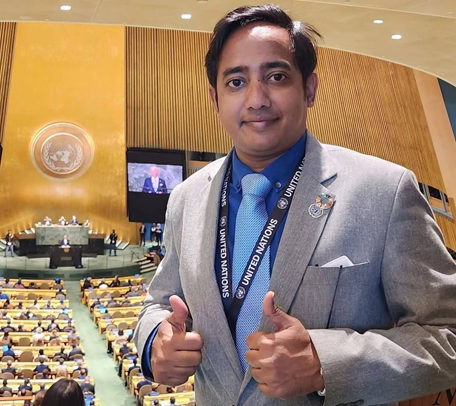
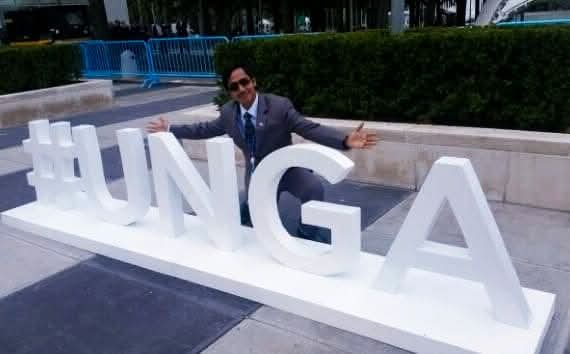
As the world observes United Nations Day on 24 October, Dr. Nehaal Mayur, an International Development Specialist, reflects on a journey that began at the United Nations General Assembly in 2012 and has continued to evolve through international engagement, cross-continental learning and a commitment to sustainable development.
For Dr. Mayur, the United Nations represents more than a global platform for diplomacy. It provides an opportunity to learn from nations, understand diverse development challenges and build partnerships that can translate international commitments into meaningful change for communities. Fourteen years after his first United Nations General Assembly experience, his journey reflects a central belief: global learning acquires its true meaning when it reaches the ground. From the United Nations General Assembly to a Global Mission, “Education is a Right.” Right for Everyone.” These words capture the philosophy that continues to guide his development journey.
Dr Mayur’s engagement with the United Nations General Assembly began in 2012, when he participated as a youth representative. What began as an opportunity to observe and learn from the international community gradually developed into a continuing journey of engagement with global development priorities, international diplomacy and multilateral cooperation. Over the years, he has followed the evolution of international development priorities, including the transition from the Millennium Development Goals to the Sustainable Development Goals and the growing urgency of addressing poverty, inequality, climate change, education and sustainable livelihoods.
His engagement continued during the COVID-19 pandemic. In 2020, he participated as a virtual observer when international meetings adapted to online formats. In 2021, he continued his engagement as an observer under restricted participation arrangements. “Every year at the United Nations has given me a new perspective on the world. But I have always believed that international exposure should not end with attending conferences. The real responsibility begins when we take that learning back to our communities and work towards practical solutions.”
For him, the value of international engagement lies not simply in witnessing global discussions but in understanding how the ideas emerging from them can contribute to development on the
ground.
From Global Dialogue to Ground-Level Responsibility
Over the years, Dr. Mayur’s development journey has extended across continents, connecting him with diverse communities, institutions and development stakeholders. From Africa to South America, and from Asia to Europe, his experiences have reinforced the importance of understanding local realities before proposing development solutions.
Landlocked developing countries face distinct geographical and connectivity challenges. Small island nations often confront heightened climate vulnerabilities and resource constraints. Least developed countries may experience interconnected challenges involving water insecurity, limited infrastructure, disaster risks and unequal access to technology and economic opportunities.
“There cannot be one development model for the entire world. Every country has its own realities, resources and priorities. What works in one place may not work in another. We must listen to communities, understand their needs and identify solutions that are locally relevant, affordable and sustainable.” This belief underpins his approach to international development: learning from global experiences while recognising that meaningful implementation must reflect the needs and aspirations of local communities.
United Nations Day: Turning Commitments into Action
United Nations Day commemorates the entry into force of the Charter of the United Nations on 24 October 1945. The day offers an opportunity to reflect on the importance of international cooperation, peace, human dignity and collective responsibility.
“The United Nations brings nations together. International platforms create opportunities for dialogue, research helps us understand challenges, and partnerships allow us to share knowledge. But the real impact of these efforts must be visible in people’s lives,” he says.
He believes that development must ultimately be measured by tangible improvements in people’s circumstances. Can a child access quality education? Does a family have safe drinking water? Are young people able to develop skills and find meaningful opportunities? Can persons with disabilities access essential services? Are vulnerable communities better prepared to face climate-related disasters? For Dr. Mayur, these are the questions that give development its human face. “Global commitments become meaningful when they create opportunities for people who need them most. We must move beyond discussing what needs to be done and strengthen our efforts to make it happen.”
Giving Sustainable Development a Human Face
Dr. Mayur’s areas of engagement include the Sustainable Development Goals, climate resilience,
water and sanitation, disaster management, youth and women’s empowerment, disability inclusion, sustainable technologies and international partnerships. These priorities reflect his understanding that development challenges are interconnected. Education can expand opportunities. Safe drinking water can protect health and dignity.
Disability inclusion can improve access to essential services. Climate resilience can help safeguard livelihoods. Appropriate technologies and international partnerships can support communities facing resource constraints.
The 2030 Agenda for Sustainable Development, adopted by all United Nations Member States in 2015, provides a shared framework through its 17 Sustainable Development Goals. Achieving these goals requires more than declarations and commitments. It demands cooperation between governments, international institutions, civil society organisations, development practitioners and communities.
“For me, sustainable development is not only about writing policies or discussing goals. It is about understanding what people need, bringing the right stakeholders together and working towards solutions that can make a difference in their daily lives.”
Education Is a Right. Right for Everyone.
Among the principles that define Dr. Mayur’s development philosophy, education holds a central place. His message, “Education is a right. Right for Everyone,” reflects his belief that access to learning and opportunity should not be determined by geography, economic circumstances or social barriers. He views education as extending beyond the classroom to include access to knowledge, skills, technology, information and meaningful participation in society. “Every child deserves the opportunity to learn. Every young person deserves the opportunity to grow. No individual should be left behind because of where they live, their economic circumstances or the barriers they face,” Dr. Mayur says.
He believes education must be accessible, inclusive and relevant to the realities of communities, particularly those facing geographical isolation or limited resources. For him, education is not merely a development indicator. It is a foundation for dignity, equality, empowerment and lasting change.
From the Global Platform to the Last Mile
Perhaps the most significant evolution in Dr. Mayur’s journey has been the growing emphasis on
translating international learning into ground-level action. He believes that global platforms are essential for sharing experiences, building relationships and developing a common understanding of international challenges. Yet the ultimate responsibility of development practitioners is to ensure that this knowledge contributes to practical outcomes.
“The journey does not end when the conference ends. It begins when we return to the
ground,” he says.
This philosophy calls for a continuous process of learning, listening, connecting, collaborating, implementing and evaluating. It also recognises that development cannot be achieved by one person or institution alone. Lasting progress requires collective ownership, sustained partnerships and the participation of the communities that development initiatives are intended to serve.
For Dr. Mayur, the objective is to connect international knowledge with local realities, ensuring
that successful practices can be adapted to different contexts without losing sight of community priorities
A Journey Connected to a Larger Legacy
Dr. Mayur’s commitment to sustainable development is also connected to a broader legacy of
service, education and environmental responsibility. Through international engagement, development initiatives, field experiences and partnerships, he continues to emphasise the importance of connecting ideas with implementation and global priorities with local needs. His vision centres on strengthening relationships between countries, institutions and communities while encouraging the exchange of knowledge, appropriate technologies and sustainable practices.
“I began my journey by learning from the world. Today, I carry that learning to the ground. Tomorrow, the responsibility is to leave behind knowledge, partnerships, institutions and solutions that can continue serving people long after we are gone.” For him, the true measure of development work is not simply the number of meetings attended, countries visited or relationships established. It is the extent to which these experiences contribute to lasting opportunities and tangible benefits for people. A meaningful legacy, he believes, is one that continues to serve communities beyond the presence of the individuals who helped create it.
United Nations Day 2026: The Journey Continues
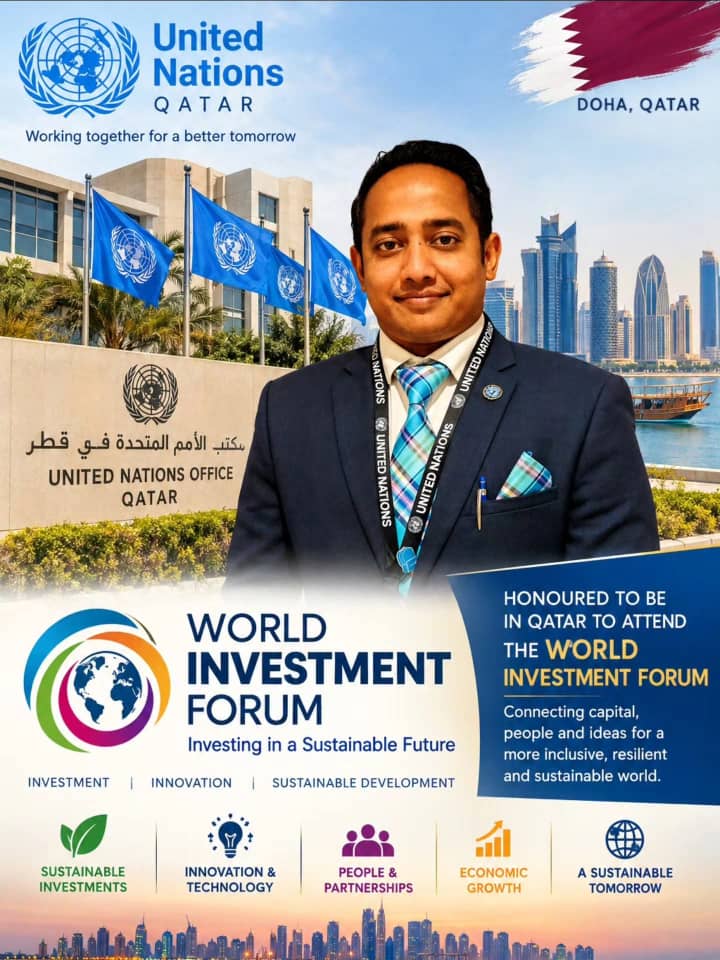
Fourteen years after his first United Nations General Assembly experience, Dr. Nehaal Mayur sees his journey as an evolving commitment to international development and sustainable
change. The world continues to face complex challenges, including poverty, inequality, climate change, displacement and unequal access to essential services. Addressing these challenges requires
countries and institutions to work together while remaining responsive to the needs of individual communities.
On United Nations Day, Dr. Mayur calls for renewed attention to the connection between global cooperation and local implementation. “The world has no shortage of ideas, declarations or development goals. What we need is stronger cooperation, meaningful partnerships and a sustained commitment to implementation. Every global commitment must ultimately translate into opportunities and improvements in people’s lives.” His journey reflects the belief that international exposure carries a responsibility to share knowledge, strengthen partnerships and contribute to solutions that are inclusive, affordable and sustainable.
The United Nations General Assembly provided the platform where his journey began. The years that followed broadened his understanding of international development. The ground continues
to provide the lessons that shape his mission. As the world marks United Nations Day on 24 October 2026, his message remains clear: international cooperation must lead to meaningful action, and development must reach the people it is intended to serve.
A Message from Dr. Nehaal Mayur
“My journey since 2012 has taught me that the world is connected by common aspirations, even when countries face different challenges.
UNITED NATIONS DAY 2026 Dr. Nehaal Mayur | Page 5
I have learned from global platforms, listened to diverse perspectives and witnessed the importance of cooperation across borders. But I believe that the greatest responsibility is to carry this learning forward and contribute to meaningful change on the ground. The United Nations reminds us that our challenges are interconnected and that our future depends on our ability to work together. Let us build bridges between knowledge and action, policy and implementation, innovation and affordability, and global commitments and local realities.
Let us ensure that education reaches everyone, that vulnerable communities are not left behind, and that sustainable development becomes a shared responsibility rather than an aspiration on paper. Because the true legacy of international development is not simply what we learn from the world, but what we contribute to it.”
Education is a Right. Right for Everyone.
Learning is a responsibility. Service is a commitment. Partnership is the pathway.
Sustainable development is a collective mission. And the legacy continues.
Dr. Nehaal Mayur
International Development Specialist
From the global platform to the ground, carrying 14 years of learning forward in the service of
sustainable development.
About the Author