Patty FANG
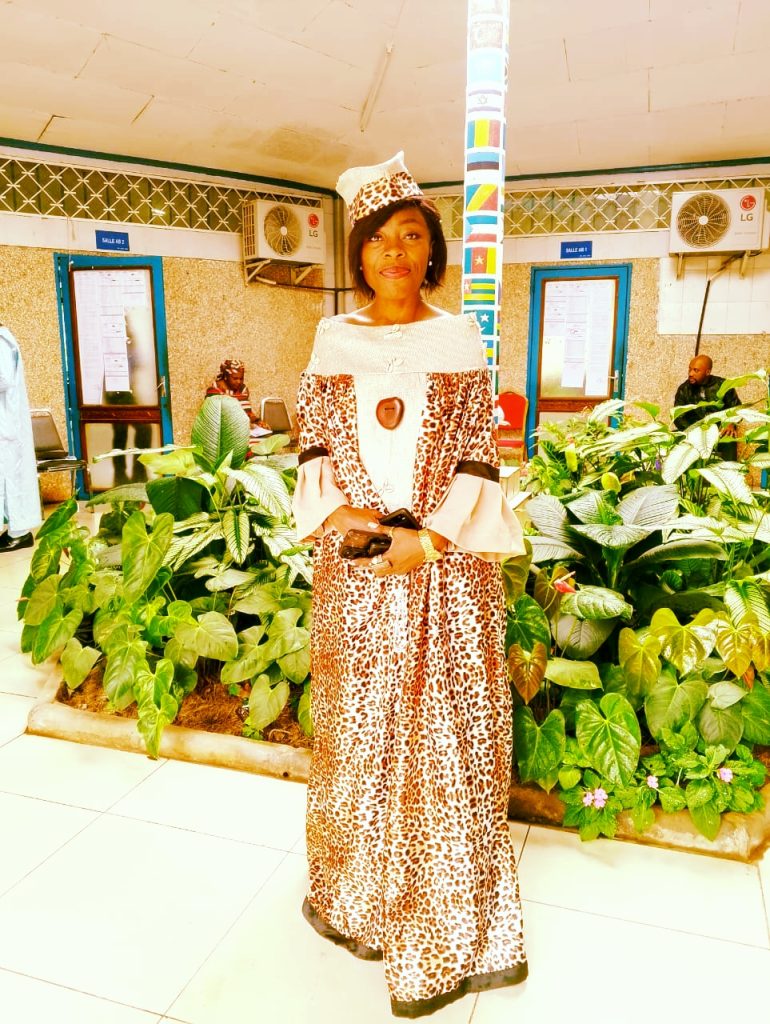
In an exclusive interview with Adenrele Adewale (Dotololive News Magazine). Patty FANG shares her faith in God after losing both her parents, struggling and surviving by selling cassava fritters and sticks to get to high school. How the FAAC was born, the challenges and successes. Her love for African culture and traditions and also promoting tourism in Cameroon.
Below are excerpts:
- Can you tell us briefly about yourself, your family and education background?
I was born in the Messamena District, in the East Region of Cameroon. I started primary school in Yaoundé. I completed it in Messamena, where I entered Messamena High School, and then the Bilingual High School of Abong-Mbang. I obtained my Professional Studies Certificate and my Baccalaureate in Moundou, in the Republic of Chad. I then pursued my university studies at the University of Yaoundé 1, where I hold a Master’s Degree 2 in African Literature and Civilizations, specializing in Oral Literature.
This academic path enabled me to enter a PhD program. I also hold a Master’s Degree 2 from the International Relations Institute of Cameroon, IRIC, at the ICESCO Chair, which also allows me to pursue a PhD. On a personal level, I lost my parents very early — first my mother, then my father. As a result, I grew up in the care of people who welcomed me.
This journey was not easy, but it shaped me. It taught me resilience, strength, and the value of education.
Today, I choose to look forward and dedicate all my energy to building and inspiring others.
- Leadership is a dynamic process, which deserves study; it is a relational process involving interactions among leaders, members and sometimes outside constituencies. What have been the most challenging and most rewarding aspects of leadership for you?
The most difficult aspect of leadership for me is the lack of resources in the face of so many ideas I have. Being a young woman also comes with its own challenges, because you have to prove yourself even more.
The most rewarding aspect is seeing my dream come true: watching FAAC grow, impacting lives, and creating opportunities for other young people.
- Who influenced you the most in life and why?
The person who has influenced me the most is God. God lives in me and inspires me. I know that when He takes away your parents, He gives you talents. God lifted me out of the depths and refined me like gold is refined.
- You are the CEO of FANG Academy Art Corporation (FAAC). What are the vision and mission of this great organisation?
FAAC was born out of my own journey. After losing my parents, I had to survive. I sold cassava fritters to get to high school. I made cassava sticks. I worked as a nanny and in hairdressing. I even founded a service agency, “Les Princesses des Chefferies Africaines,” and a clothing brand, “Noblesses by Patty.”
All of this work taught me one thing: our talents can get us out of any situation, but they need to be nurtured.
– The mission of FAAC is to promote the excellence of talents.
– The vision of FAAC is to become the leading academy that identifies, trains, and professionalizes talents to turn them into leaders and entrepreneurs.
- Professionals, educationists and researchers are expected to come together and discuss how to improve the industry and create more jobs to develop the African continent. What’s your view on this?
Personally, I would first speak about faith in God. Then, about having the courage to face discouragement. You have to be your own biggest supporter. You also need to know how to set boundaries and be patient.
The journey is not easy, but with God, hard work, and perseverance, you will always see the fruits.
- Computers have become an essential part of everyone’s life and are used in every sector, such as education, communication, business, entertainment, construction, medicine, defence and so on… How do you see the world in 2050 and beyond?
By 2050 and beyond, the world will be an entirely digital and interconnected world, where the computer will no longer be a tool but an extension of the human brain.
In Education
Physical classrooms will disappear, replaced by virtual classrooms in augmented reality. Every student will have a personalised AI tutor. A language, a profession, or a skill will be learned in 3 months thanks to simulation.
In Health and Medicine
Quantum computers will make it possible to find treatments for cancer and Alzheimer’s. Surgery will be performed remotely by robots. Each person will have their digital twin that will predict diseases 10 years in advance.
In Work and Business
80% of repetitive tasks will be automated. Jobs will change: there will be more demand for creativity, ethics, and AI management. Companies will operate 24/7 with no physical office.
In Daily Life and Society
Cities will be “smart cities”: autonomous cars, self-managed homes, and clean energy run by AI. Communication will take place through holograms. The line between the real and the virtual will almost disappear with the metaverse.
The Major Challenge in 2050:
It will no longer be about access to technology but about the divide between those who know how to control AI and those who are controlled by it. The question will be ethical: how do we keep the human being at the centre?
Conclusion
By 2050, computers will have solved many of humanity’s problems. But the greatest challenge will remain to stay human in a world of machines.
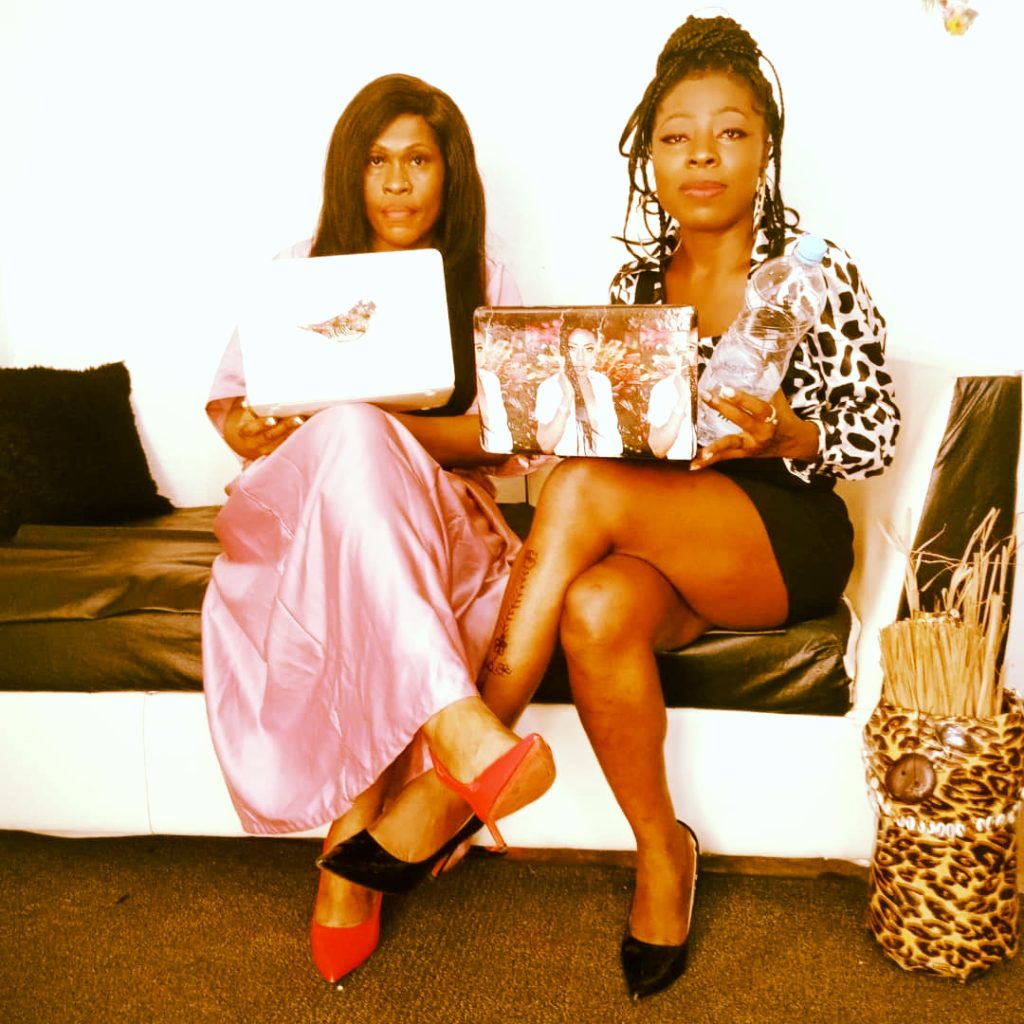
- You are currently a PhD candidate at the University of Yaoundé in the Department of African Literature and Civilisations. How have you been able to inspire younger ones on education?
My biggest failure was losing all my merchandise, worth two million four hundred thousand CFA francs, on my way back from an event where FAAC was exhibiting. At the time, it was a shock. I learned that in entrepreneurship, you must anticipate risks and properly secure your work.
But above all, I learned not to dwell in self-pity. I understood that sometimes God allows loss to teach us resilience. I got back up, I started again, and today I am more careful, stronger, and more strategic.
- In terms of tourism, some countries are forced to be reckoned with a stable economy. How would you educate interested students and potential tourists to visit Cameroon and tell us the major tourism sites?
In terms of tourism, some countries are must-visit destinations thanks to a stable economy. How would you raise awareness among interested students and potential tourists to visit Cameroon, and what are the main tourist sites?
Cameroon is “Africa in miniature”. And that is precisely our greatest strength.
To raise awareness among students and tourists, I would focus on three pillars: authenticity, education, and digital outreach.
For students: I would create “Cultural and Leadership Immersion Camps” through FAAC. The goal would be to bring students from across Africa and the world to learn, engage in volunteer work, and discover our local talents. Tourism then becomes a transformative educational experience.
For tourists: I would highlight our stories through digital platforms. Documentaries, influencers, virtual tours. We must show the world that Cameroon offers the security of warm hospitality, the richness of cultural diversity, and the breathtaking beauty of our landscapes.
The main tourist sites I would promote are:
– The North: Waza National Park for safaris and the rich culture of the Kirdi people.
– The West and North-West: The Bamileke chiefdoms and kingdoms, renowned for their art and craftsmanship. Foumban and its Royal Museum.
– The Littoral and South-West: The Ekom Nkam Falls and Limbe with its botanical garden and beaches.
– The South: Kribi and the Lobé Falls, and the Campo Ma’an National Park.
– The Centre: Yaoundé, the Mbankolo Hill, and the handicrafts market.
– The East, Messamena, its forests, and the cultural wealth of the region’s communities.
Cameroon has it all: the sea, the mountains, the savanna, and the rainforest. What we need now is to tell our story to the world more effectively.
African ethnic groups and tribes have customs and traditions that are unique to their culture. What do you like about African culture?
What I love most about African culture is its depth and its humanity. I love the sense of community. In our culture we say, “I am because we are.” No one grows up alone. When I lost my parents, it was the community that took me in. This spirit of solidarity and sharing is a treasure the world should emulate. I love oral tradition. Our folktales, proverbs, griots, legends, and myths. It is a school of wisdom. This is why I pursued a master’s degree in oral literature. Our ancestors embedded all their knowledge in the spoken word.
I love the respect for elders, chieftaincies, and traditions. Even amid modernity, we remain rooted. Our dances, our traditional attire, our rites of passage… everything has meaning. I love the strength of African women. Hard-working, resilient, and the guardians of culture and family. They are the backbone of our societies.
African culture has shaped me. It has taught me patience, respect, and faith. It is the very reason FAAC exists today: to reveal talents and help them become grounded, impactful leaders.
- Dotolive News Magazine would like to promote and report your activities. How would you support the media organisation?
I would fully support Dotolive News Magazine. A media outlet that chooses to highlight the initiatives of young people and women plays an essential role for our country.
For my part, I commit to opening the doors of FAAC to you: giving you access to our activities, our projects, our beneficiaries, and our results. I will be available for interviews, features, and the campaigns you lead.
I believe that by joining forces, we can inspire more young people, showcase positive role models, and prove that Cameroon is moving forward. Your platform has the voice; we have the fieldwork. Together, let’s make these stories that build our nation shine.
Today, since FAAC is still in its early stages, we do not yet have financial revenue, but we do have the commitment, the vision, and the willingness to grow with partners like you.
- Amazing memories are unforgettable; can you share with us the most amazing memory?
The most beautiful memory of my life is meeting an extraordinary person. To me, he entered my life like a king enters his kingdom.
At a time when I needed it most, a time when I felt lost and without direction, he came with a mission: to lift me up, to believe in me, and to put me back in school. Thanks to him, I was able to continue my studies and reach this level.
That day, I understood that there are souls of destiny. People whom God places on our path to help us fulfil our mission.
That encounter changed the course of my life. It is my most beautiful memory, and it still carries me today.
Thanks for sharing with DNM.
Thank you.
DNM 2026
About the Author