FG, World Bank Drive Digital Agriculture to Empower Smallholder Farmers
The federal government, in partnership with the World Bank and the ACReSAL Project, has commenced the transition and expansion of a digital farming advisory platform designed to improve productivity, strengthen climate resilience, and enhance food security among smallholder farmers across Nigeria.
The initiative marks a significant step in the country’s push to modernize agricultural extension services through technology, ensuring that farmers particularly those in remote and underserved communities—an access timely, reliable, and actionable agricultural information.
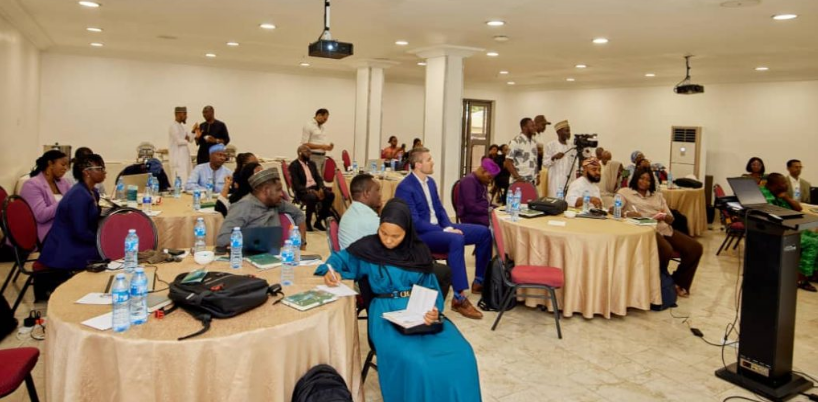
The transition process was formally announced during a three-day workshop held in Abuja, where stakeholders gathered to finalise modalities for transferring ownership and long-term management of the Nigeria Digital Precision Agricultural Extension (DPAE) platform to the Federal Government.
Officials described the development as a critical milestone in embedding digital innovation within Nigeria’s agricultural ecosystem, especially at a time when climate change, population growth, and rising food demand continue to place pressure on food systems.
A Shift Toward Digital Agricultural Extension Services
For decades, Nigeria’s agricultural extension system has faced structural challenges, including limited field officers, inadequate funding, and difficulty reaching farmers in rural communities. These gaps have often slowed the adoption of improved farming practices and contributed to persistent low yields.
The DPAE platform was developed as a response to these challenges, offering a scalable, technology-driven solution that delivers personalised agricultural guidance directly to farmers through mobile phones.
The platform provides automated voice call services in Hausa, ensuring accessibility for farmers in northern Nigeria where language barriers and literacy levels have historically limited access to written agricultural information.
Through the system, farmers receive real-time advice on weather conditions, planting techniques, pest and disease management, fertiliser application, and other climate-smart agricultural practices designed to improve productivity and reduce post-harvest losses.
By integrating digital tools into extension services, the initiative is helping to bridge long-standing information gaps that have limited agricultural efficiency in rural communities.
Addressing Climate and Productivity Challenges in Agriculture
Nigeria’s agricultural sector remains highly vulnerable to climate change, with irregular rainfall patterns, prolonged dry spells, flooding, and rising temperatures affecting crop production across different regions.
Officials of the ACReSAL Project noted that the digital advisory platform was designed specifically to help farmers adapt to these challenges by providing timely, location-specific recommendations.
Instead of relying on generalised advice, farmers receive targeted information based on crop type, weather conditions, and seasonal trends, enabling them to make more informed decisions throughout the farming cycle.
This shift is particularly important in northern Nigeria, where climate variability has increasingly disrupted traditional farming calendars and reduced agricultural output.
By equipping farmers with practical guidance at critical stages of production, the platform supports improved resilience and helps reduce the risks associated with climate-related shocks.
Pilot Phase Reach and Farmer Engagement
During its pilot phase, the DPAE platform focused on key agricultural value chains including maize, sorghum, tomato, groundnut, cowpea, and rice.
The program was implemented across Kano, Niger, Adamawa, Sokoto, Bauchi, Gombe, Kaduna, and the Federal Capital Territory, reaching thousands of smallholder farmers across these regions.
According to project partners, more than 20,000 farmers were successfully reached during the recent dry-season farming cycle, demonstrating the scalability and effectiveness of the platform.
Feedback from participating farmers has been largely positive, with 97 percent of surveyed users expressing confidence in the accuracy and usefulness of the advisory messages received.
Stakeholders attribute this high level of trust to the platform’s ability to provide practical, easy-to-understand, and locally relevant farming advice delivered directly to farmers’ mobile phones.
For many farmers, this marks a significant improvement over traditional extension systems, where access to agricultural support is often limited or delayed.
READ ALSO: https://dotolivenews.net/migrants-flee-south-africa-after-xenophobia-attack/
Transition to Government Ownership and Sustainability
A key focus of the current phase is the transition of the platform from a donor-supported initiative to full government ownership and management.
Using a Build, Operate and Transfer model, technical partners spent the past year developing, testing, and refining the system before handing it over to government institutions for long-term sustainability.
Officials of the Federal Ministry of Agriculture and Food Security described the transition as a strategic step toward institutionalising digital agricultural extension services within Nigeria’s public sector framework.
They emphasised that the goal is not only to maintain the platform but to expand its reach to millions of farmers nationwide, ensuring that digital advisory services become a permanent feature of Nigeria’s agricultural development strategy.
The ministry also noted that strengthening institutional capacity is central to the platform’s long-term success, particularly in areas such as data management, content creation, and system monitoring.
Building Capacity for Long-Term Impact
As part of the transition process, technical officers from the Federal Ministry of Agriculture and Food Security and the ACReSAL Project are undergoing intensive training.
The training covers key operational areas including farmer registration, database management, content development, audio recording, automated call scheduling, and system performance monitoring.
This capacity-building effort is designed to ensure that government institutions can independently manage and scale the platform without external dependency.
By strengthening internal expertise, the initiative aims to create a sustainable digital extension ecosystem capable of adapting to future agricultural challenges.
Officials say this institutional readiness is essential for maintaining service quality and expanding coverage to new regions and crop value chains.
Role of Technology Partner and Innovation Model
The platform was developed in collaboration with Precision Development (PxD), an international organisation focused on using digital tools to improve the livelihoods of smallholder farmers.
The organisation worked alongside government and development partners to design a system that combines agricultural science, behavioural insights, and mobile technology to deliver simple but effective farming guidance.
The Build, Operate and Transfer model adopted for the project allowed for rigorous testing, refinement, and real-world validation before the system was fully handed over to government authorities.
This approach ensured that the platform was not only functional but also responsive to the real needs of farmers across different ecological zones.
Strengthening Nigeria’s Food Security Agenda
Stakeholders believe that the expansion of the DPAE platform could play a significant role in strengthening Nigeria’s food security architecture.
By improving access to agricultural information, the system is expected to increase productivity, reduce crop losses, and support better decision-making among smallholder farmers who form the backbone of the country’s agricultural sector.
Improved yields at the smallholder level are particularly important in Nigeria, where millions of households depend on agriculture for both income and food consumption.
The initiative also aligns with broader national goals of modernising agriculture, improving resilience to climate change, and increasing the adoption of technology-driven solutions in rural development.
Toward a More Connected Agricultural Future
As digital transformation continues to reshape key sectors of the economy, agriculture is increasingly emerging as one of the most important frontiers for innovation.
The DPAE platform represents a shift from traditional, in-person extension services to a more scalable, data-driven, and inclusive model that leverages mobile technology to reach farmers wherever they are.
Stakeholders say the long-term vision is to expand the system beyond pilot states and integrate additional features that could include market price updates, financial services information, and broader climate advisory tools.
For now, the focus remains on ensuring a smooth transition, strengthening government capacity, and scaling impact across Nigeria’s diverse agricultural landscape.
Conclusion
The transition of the digital farming advisory platform represents a major milestone in Nigeria’s agricultural development journey.
By combining technology, institutional collaboration, and farmer-centered design, the initiative is helping to reshape how agricultural information is delivered and used across the country.
If successfully scaled, the platform could significantly improve productivity, enhance climate resilience, and strengthen food security for millions of smallholder farmers, positioning Nigeria for a more sustainable agricultural future.
About the Author