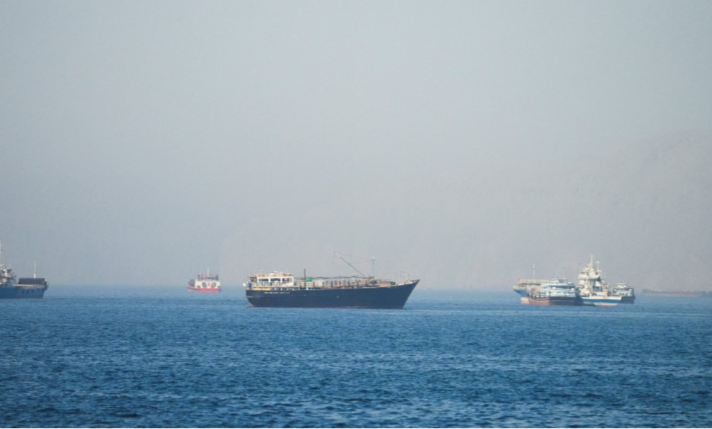
Strait of Hormuz
As more oil tankers exit the Strait of Hormuz, oil prices have fallen to levels not seen since before the start of the Iran-Iraq War on 28 February.
An initial accord reached last week to end the US-Israeli war with Tehran has allowed the resumption of traffic through the vital passage for global energy supplies.
Brent crude was trading at around $72 a barrel on Thursday morning, the price it was at the day before the launch of attacks on Iran.
Energy prices exploded after Tehran responded to the strikes, attacking neighbouring countries and effectively closing the narrow strait.
At one point, the price of Brent crude reached as high as nearly $120 a barrel, placing pressure on economies worldwide.
The United Nations maritime agency has been coordinating the safe exit of stranded commercial vessels and sailors from the Strait.
It says it plans to evacuate 11,000 seafarers aboard an estimated 600 trapped ships in cooperation with Iran, Oman, all other coastal states in the region, the United States, and the maritime industry.
Amid the uneasy 60-day ceasefire, the International Maritime Organization says moving the vessels will be done gradually to avoid any risk of collision
In peacetime, around 120 ships pass through the Strait of Hormuz each day, carrying about a fifth of global oil and LNG gas exports, making it one of the world’s most important waterways.
About the Author